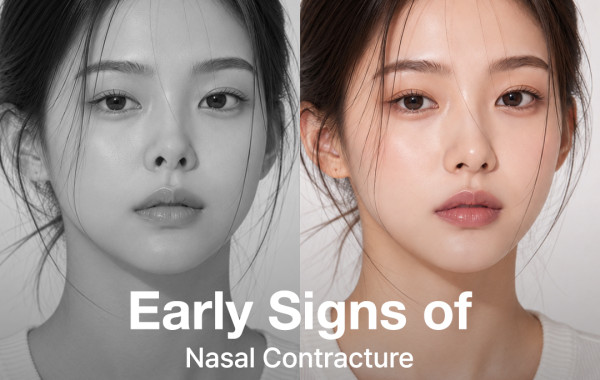
Early Signs of a Contracted Nose: Hard, Upturned Tip? | BAROKO
Medically reviewed: Dr. Jun Kim ·
Learn which changes after rhinoplasty may suggest a contracted nose, how healing can feel similar, and when to seek medical care.
Article
Is a Hard, Upturned Nasal Tip an Early Sign of a Contracted Nose?
An increasingly upturned tip, a nose that looks shorter, and more visible nostrils may be signs of a contracted nose after rhinoplasty. Firmness alone cannot confirm it: swelling and scar tissue can also make the tip feel hard while it heals. Compare photos taken from similar angles over time. Seek medical care promptly if you notice warmth, worsening pain, discharge, skin damage, or an exposed implant.
What changes should you look for?
A contracted nose can develop when scar tissue tightens and pulls on the skin and soft tissue after surgery. An implant problem or a history of inflammation may be involved, but the cause varies. Appearance and touch alone are not enough to diagnose it. A medical review of contracted nose deformity describes nasal tip upturning and increased nostril visibility as possible features.
Look for a pattern rather than a single photograph:
-
Tip position: Does the tip appear to move upward compared with earlier photos?
-
Nasal length: Does the profile gradually look shorter?
-
Nostril visibility: Are the nostrils becoming more visible from the front?
Note when the change began. Did it appear soon after surgery, or did it develop after the nose had seemed stable? Skin that looks increasingly tight or a new asymmetry is also worth discussing. Do not press repeatedly on the implant to investigate it yourself.

Could the firmness be part of normal healing?
The nasal tip can feel firm during recovery because swelling and internal scar tissue are still changing. Its shape may also continue to change. If the tip has been firm since the operation but pain is improving and the shape remains stable, keep the scheduled follow-up. If it starts pulling upward or the nose looks progressively shorter after the initial swelling settles, contact the surgical team for an assessment.
A photograph is a record, not a diagnosis. Lighting, facial expression, and camera angle can exaggerate differences. Compare front and profile photographs taken under similar conditions, ideally with their dates. A series of images may be more useful than comparing a picture taken right after surgery with one taken months later. Bring the date of surgery, information about any implants or cartilage, and records of previous inflammation if you have them.
A progressing upward pull or shortening should be evaluated even without pain. If photographs or operative records are unavailable, you can still have an examination; describe the approximate surgery date, materials used, when the change began, and any breathing difficulty.

When should you seek medical care?
-
Routine follow-up: The tip feels firm soon after surgery, discomfort is decreasing, and its shape is stable.
-
Contact your surgeon: The tip has newly turned upward or the nose seems to be getting shorter.
-
Prompt assessment: Redness or warmth, worsening pain, discharge, damaged skin, or a suspected exposed implant appears.
You do not need to wait a full year to ask for an evaluation. An appointment does not automatically mean another operation. The clinician may recommend monitoring, treatment of inflammation, implant-related care, or a discussion of revision surgery after examining the tissue.
What should you ask at the consultation?
Ask which findings are confirmed, what might be causing the change, whether anything needs treatment now, and which changes should prompt another visit. The skin, scar tissue, implant, prior surgical materials, and any breathing difficulty can all affect the assessment. The timing and method of any further treatment depend on the individual findings.
Ask the clinician to separate what needs treatment now from what can be monitored, and to explain the limits of each option. Whether implant removal and reconstruction can occur together depends on the skin and any infection. Ask which changes should trigger another visit and when the next review should take place.

Related Care
BAROKO explains its related care on the Korean-language pages for Contracted Nose Revision Rhinoplasty, Revision Rhinoplasty for Implant Complications, and Nasal Foreign-Body Removal. A page can help you prepare questions, but only an examination can guide a personal treatment plan.
The change over time matters more than firmness alone
Record any upward pull of the tip, shortening of the nose, or growing nostril visibility. If the change progresses, arrange an examination. If there is warmth, pain, discharge, skin injury, or implant exposure, do not wait for a routine follow-up. Diagnosis and treatment vary with your surgical history and tissue condition.
Frequently asked questions
Does a hard nasal tip always mean a contracted nose?
When should I seek a consultation if my nasal tip looks more upturned?
Should I wait if I notice warmth or discharge?
Can photographs diagnose a contracted nose?
Must a suspected contracted nose be revised immediately?
Have a question? Dr. Jun Kim answers your consultation in person.
Request a consultation